
wlbrobot Linear Actuators Explained: Types, Working Principles, and Key Specs
2025-11-29Semi-Closed vs Fully-Enclosed Linear Modules: Sealing, Contamination and Lifetime
2025-12-021. The Basics: What Do These Two Linear Modules Look Like?
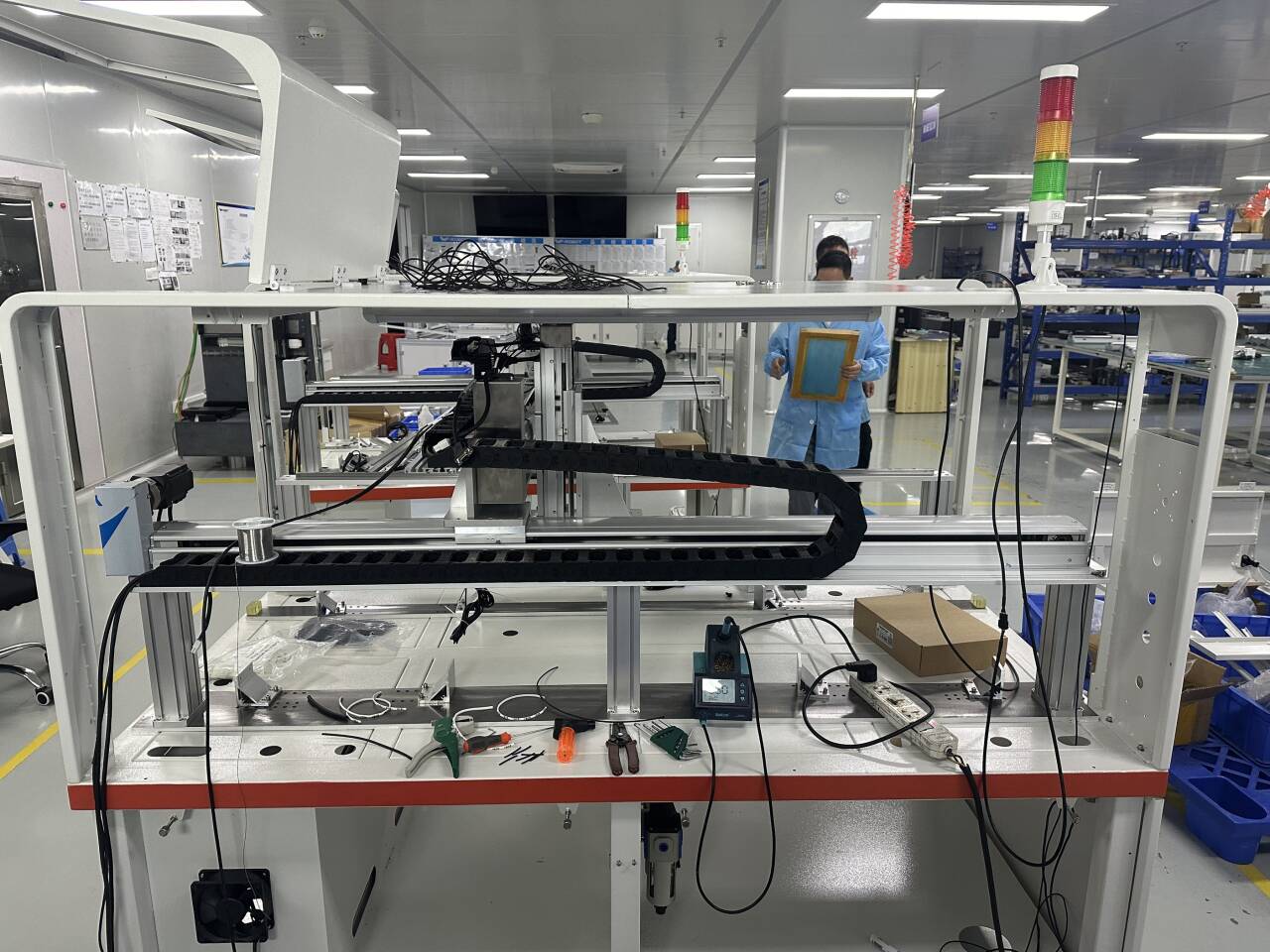
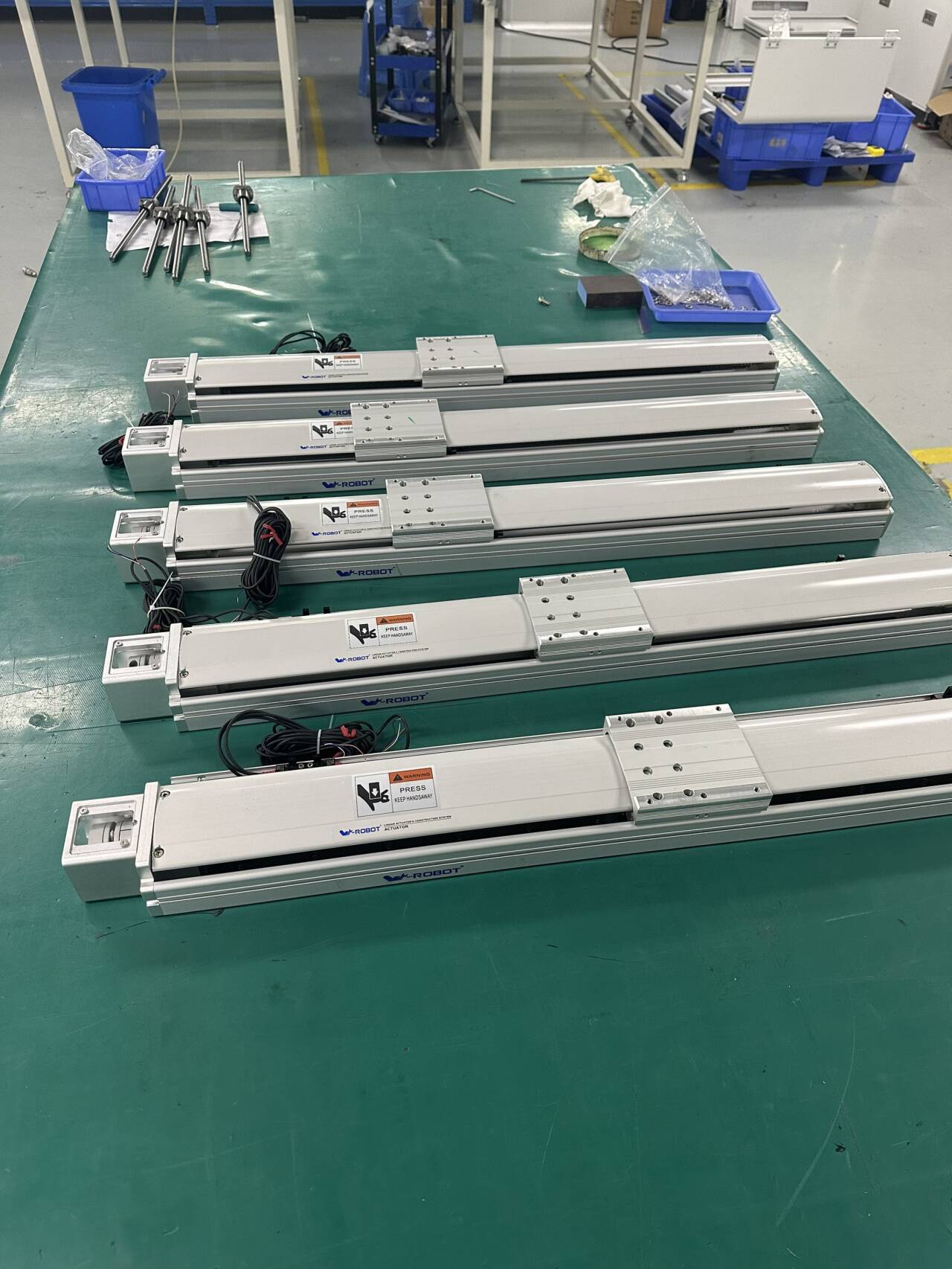
1.1 Ball-screw linear module
A ball-screw linear module combines:
- A rotating ball screw and ball nut
- Linear guides and blocks
- An aluminum or steel body
- A moving carriage with mounting holes
The motor (stepper or servo) turns the screw. The nut moves along the screw, pushing the carriage. Recirculating balls between screw and nut reduce friction and backlash, giving high precision and high stiffness.
1.2 Belt-driven linear module
A belt-driven linear module uses:
- A timing belt looped around pulleys
- A carriage attached to the belt
- Linear guides integrated into an aluminum profile
The motor drives one pulley. As the belt moves, the carriage travels along the body. The belt teeth mesh with the pulley, so slip is minimal while allowing very high speed and long stroke.
2. Precision and Repeatability: Who Wins?
2.1 Ball screw for high precision actuators
If your application is about accurate positioning and tight repeatability, ball-screw modules are usually the safer choice.
- Fine screw leads (for example 5 mm or 10 mm per revolution) make it easy to achieve small positioning increments.
- Rolling contact between balls and races gives low backlash and excellent repeatability, especially with preloaded nuts.
- Stiff mechanical transmission supports micro-movement and smooth low-speed control.
Typical use cases:
- High precision assembly
- Test and measurement stages
- Vision alignment axes
- Dispensing and micro-machining
2.2 Belt drive accuracy: good enough in many cases
Belt-driven modules are not “inaccurate”; they are simply less precise than ball screws.
- Belt elasticity introduces small position errors under changing loads.
- Over long strokes, belt stretch and temperature can further shift the position.
However, for many tasks such as feeding parts, packaging, palletizing, loading/unloading, the required accuracy is in the sub-millimeter to millimeter range, which a well-designed belt module can handle easily.
3. Stroke Length and Speed: Where Belt Drive Shines
3.1 Stroke limits with ball screws
Ball-screw modules are limited by critical speed of the screw. As the screw gets longer and rotates faster, it can start to whip and vibrate.
- Practical strokes are usually short-to-medium.
- Very long strokes require a large diameter screw, extra supports, or limited speed.
If you push a long ball screw too fast, you risk vibration, noise, and shortened lifetime.
3.2 Belt modules for long stroke actuators
Belt-driven modules are ideal for long stroke, high speed motion.
- The belt doesn’t have the same critical speed limitations as a long rotating screw.
- Strokes of several meters are common.
- Linear speeds of over 2–3 m/s are realistic with proper design.
This makes belt modules an excellent choice for:
- Transfer systems between stations
- Packaging lines with long travel distances
- Gantry systems moving across large work areas
If your design requirement says “long stroke actuator” with fast cycles and moderate accuracy, you should evaluate belt-driven solutions first.
4. Load, Stiffness, and Pushing Force
4.1 Ball screw: strong thrust and stiffness
Ball-screw modules transmit torque through a steel screw and nut, giving:
- High linear thrust
- High stiffness against compression and tension
- Good resistance to external process forces
They are suitable for:
- Vertical axes that must hold weight without drifting
- Pressing operations
- Applications with changing process loads (e.g., drilling, forming, inserting)
4.2 Belt drive: lighter and more flexible
Belt-driven modules can move significant payloads, but:
- Thrust is limited by belt strength, tooth shear, and clamping forces.
- Elastic belts make the system less stiff, especially under heavy loads or impact forces.
They are usually chosen when the main requirement is moving a load quickly, not pressing against a hard surface.
5. Environment and Protection
5.1 Ball screw in dirty environments
Open ball screws do not like abrasive dust or chips.
- Contamination can enter the nut and shorten life.
- Regular lubrication and protection are important.
To handle harsh environments, many suppliers offer fully enclosed ball-screw linear modules with:
- Covers, strips, or bellows
- Wipers and seals
- Grease ports for easy maintenance
These are common in machining centers, woodworking machines, and dusty industrial lines.
5.2 Belt modules and contamination
Belts are generally more tolerant of dirt and splashes, but they still age:
- Dust and oil can degrade rubber materials over time.
- In aggressive environments, covers and seals are recommended.
For applications like packaging, material handling, or non-abrasive dust, a semi-protected belt module is often enough.
6. Cost, Maintenance, and Lifetime
6.1 Initial cost comparison
In many cases:
- For short to medium strokes, ball-screw modules may be only slightly more expensive than belts, considering they provide higher precision.
- For very long strokes, belts win on cost because ball screws require larger diameters and stronger supports.
6.2 Maintenance characteristics
- Require periodic lubrication to maintain life and smooth motion.
- May need nut or screw replacement after a certain life time (depending on duty).
- Require belt tension checks and occasional belt replacement as the belt stretches or ages.
- Pulleys and bearings also have a finite life but are relatively easy to service.
If you expect heavy duty cycles over many years, ask suppliers for life calculations based on your load, speed, and duty cycle.
7. Practical Linear Module Selection: A Simple Decision Guide
When you face the “ball screw vs belt drive” choice, walk through these questions.
7.1 What accuracy and repeatability do you need?
- Tight tolerances, precise positioning, or alignment
- Choose a ball-screw linear module or another high precision actuator.
- Rough positioning, transfer, or indexing
- A belt-driven linear module is usually sufficient.
7.2 How long is the stroke and how fast must you move?
- Stroke < 800–1000 mm and speed moderate
- Either ball screw or belt can work. Use precision requirements as the deciding factor.
- Stroke in the meter range and high speed
- Belt-driven modules are usually better suited.
7.3 What are the loads and forces?
- Significant static load, vertical axis, or process forces?
- Ball-screw modules provide better thrust and stiffness.
- Mainly moving parts from point A to B with moderate load?
- Belt modules can handle it with lower cost and higher speed.
7.4 What environment will the module work in?
- Heavy dust, chips, or splashing coolant?
- Look for fully enclosed ball-screw or belt modules with appropriate seals.
- Relatively clean environment (electronics, packaging, logistics)?
- Semi-closed belt or screw modules are typically enough.
7.5 How important are cost and flexibility?
- For a single high-end machine, performance may be more important than price → ball screw or even linear motor.
- For large gantry systems, conveyors, and long-stroke transfer lines, belt-driven modules often give a better cost-to-distance ratio.
8. Example Use Cases
8.1 Choosing a high precision actuator for inspection
You are designing an inspection station that moves a camera over small parts. Tolerance is tight, and repeatability must be within a few microns.
- Short stroke
- Light load
- High precision and stability
Recommended: ball-screw linear module with precision guideways, possibly combined into an XY stage.
8.2 Designing a long-stroke loading axis
You need to move product carriers between processes over a distance of 2–3 meters, and cycle time is critical.
- Long stroke
- Moderate load
- Millimeter-level positioning is acceptable
Recommended: belt-driven linear modules or gantry system, maybe combined with a shorter ball-screw Z-axis for precise vertical positioning.
9. Conclusion: No Universal Winner, Only a Better Fit
There is no absolute winner in the ball screw vs belt drive debate. Instead, there is a better fit for each machine:
- Choose a ball-screw linear module when you need a high precision actuator with strong thrust, stiffness, and repeatability over short to medium strokes.
- Choose a belt-driven linear module when you need a long stroke actuator with high speed, lighter loads, and cost-efficient coverage of large distances.
By looking honestly at your requirements—precision, stroke, speed, load, environment, and budget—you can turn a confusing catalog page into a clear, justified decision for your next linear module selection.
