
Ball-Screw vs Belt-Driven Linear Modules: How to Choose for Your Machine
2025-12-01What Is a Linear Motor Module and When Do You Really Need One?
2025-12-031. What Is an “Enclosed Linear Module”?
An enclosed linear module is a linear axis whose drive system and guideways are covered or sealed so that contamination from the environment is reduced.
Internally it still contains:
- A ball screw or belt (or linear motor)
- Linear guide rails and blocks
- A carriage carrying the load
The enclosure mainly affects how exposed these moving parts are to dust, chips, and liquids.
Manufacturers usually offer at least two protection styles:
- Semi-closed modules
- Fully-enclosed modules
2. Semi-Closed Linear Modules
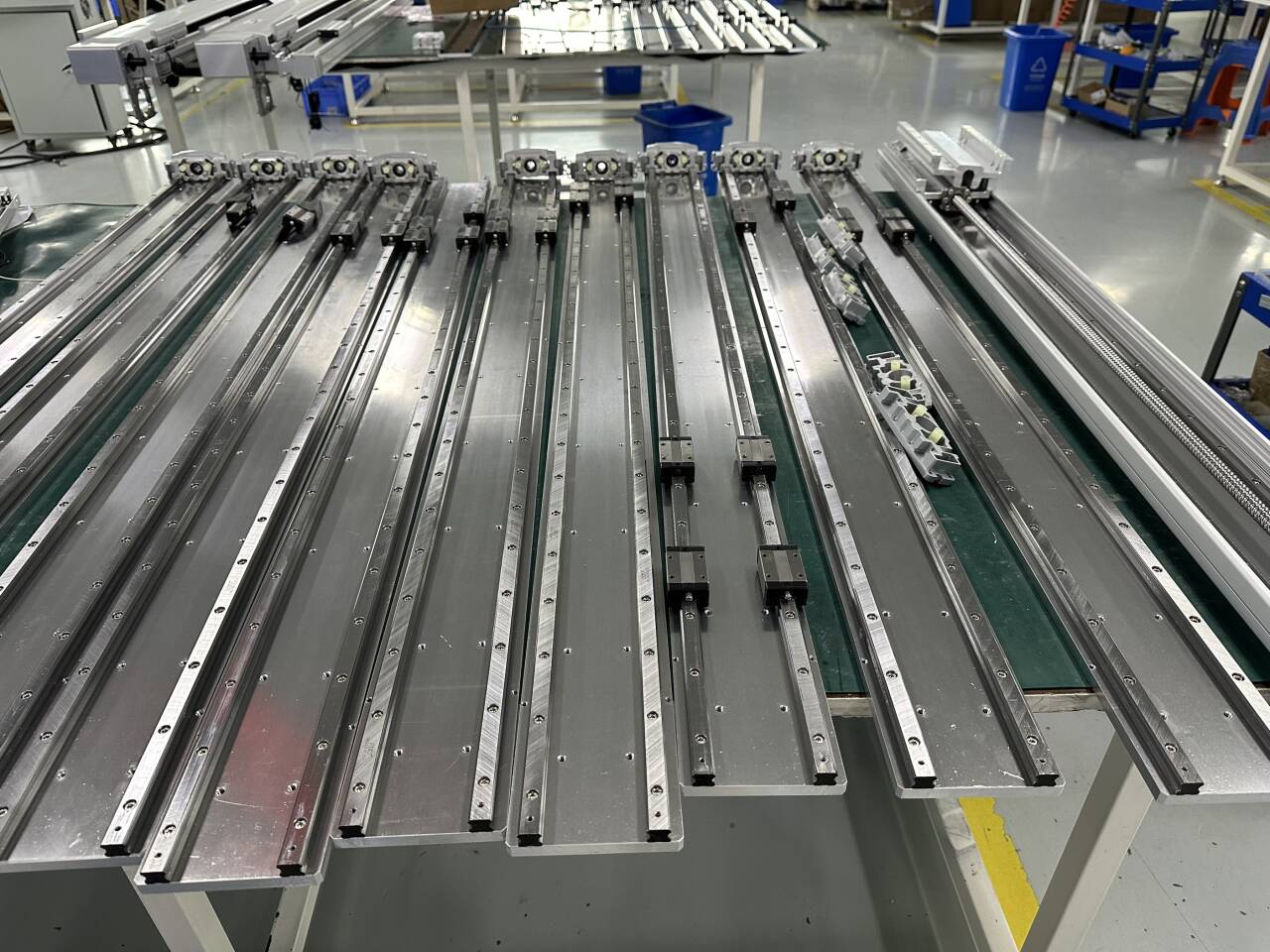
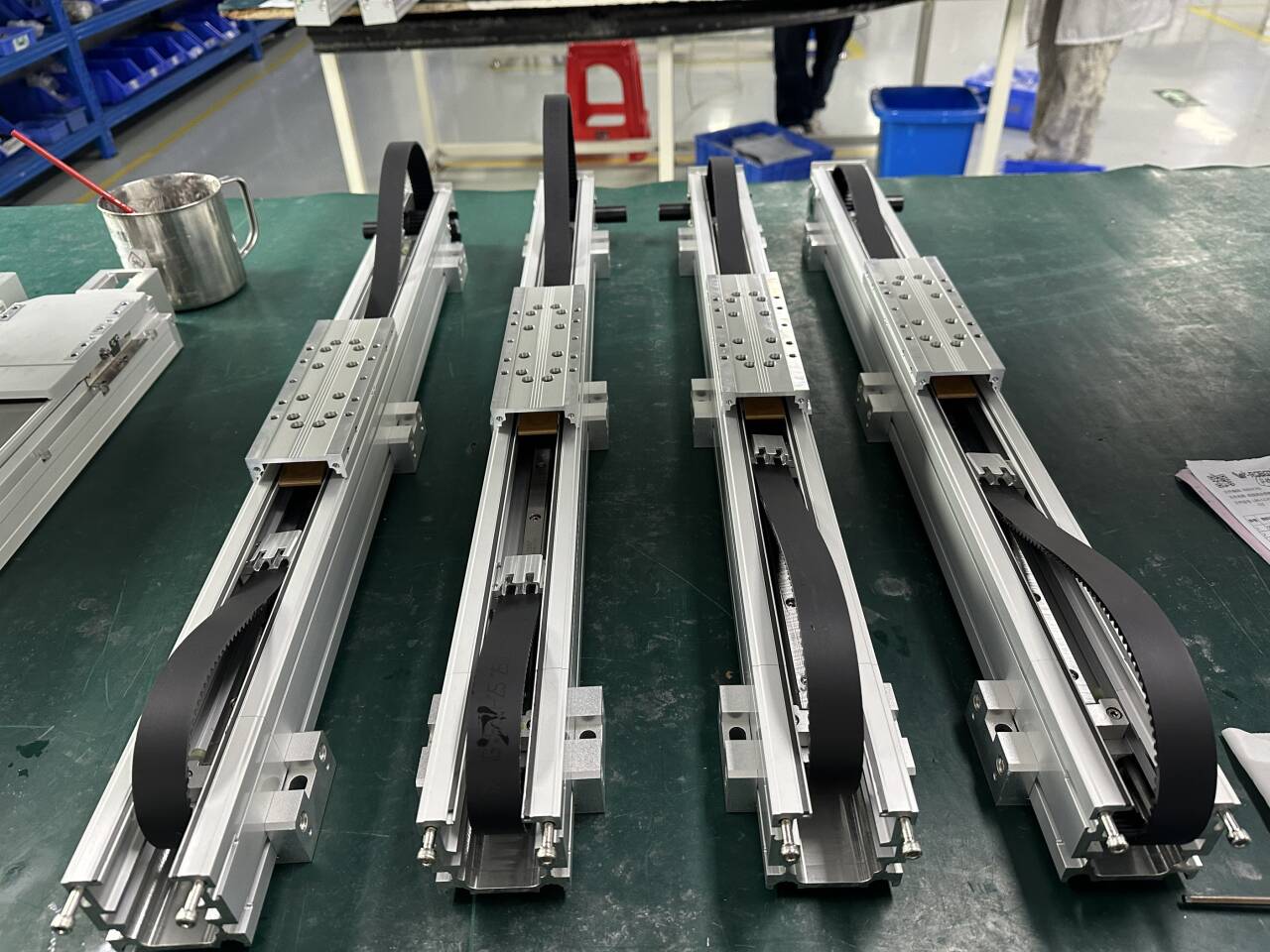
A semi-closed module offers partial protection. Some elements are covered; others remain visible.
Typical features:
- The body is an aluminum profile with open slots or gaps.
- Guides and sometimes the screw or belt are visible from the side.
- Protective strips or simple wipers may cover only part of the travel.
2.1 Advantages of semi-closed modules
- Cost-effective: less material and machining than fully sealed versions.
- Good accessibility: easy to inspect and lubricate the screw or guides.
- Lower friction: minimal contact between seals and moving parts.
- Suitable for clean or lightly contaminated environments such as electronics assembly, lab automation, or packaging without aggressive dust.
2.2 Limitations
- Sensitive to fine dust, powder, metal chips, fibers, and splashing liquid.
- Contamination can stick to the screw, belt, or guides and migrate into bearings.
- In harsh environments, lifetime may drop dramatically compared with a fully-enclosed design.
Semi-closed modules are ideal when the surrounding air is relatively clean and the main goal is cost and simplicity.
3. Fully-Enclosed Linear Modules
A fully-enclosed linear module is designed to keep contaminants out as much as possible.
Typical features:
- The screw or belt and guides are hidden inside a closed housing.
- Top surface may use steel cover strips, telescopic covers, or bellows.
- End caps include seals and wipers to limit dust entry.
- Sometimes the body is pressurized or designed to be used with positive air purge.
3.1 Advantages of fully-enclosed modules
- Much better resistance to dust, chips, oil mist, and splash.
- Longer service life in harsh environments, especially for ball screws and guides.
- More stable performance over time: fewer surprises from contamination-related wear.
- In some designs, sealing can help achieve higher IP protection ratings (for example IP54 or IP65, depending on the construction).
Typical applications:
- Machine tools and cutting equipment
- Woodworking machines generating chips and dust
- Battery, PV, or metal processing lines with powders
- Environments with splashing coolants or cleaning fluids
3.2 Limitations
- Higher initial cost due to more complex housing and seals.
- Slightly higher friction from seals, which can increase required drive torque.
- Access for maintenance may require removing covers or end caps.
4. How Contamination Damages Linear Modules
Why does enclosure matter so much? Because ball screws, belts, and linear guides are sensitive to dirt:
4.1 Ball screws and guides
- Abrasive particles (dust, chips, powders) can enter the ball nut and guide blocks.
- These hard particles become an unwanted “grinding paste” in the lubrication.
- Result:
- Increased friction and noise
- Worsened repeatability
- Pitting, flaking, or scoring on raceways
- Shortened service life and unexpected downtime
4.2 Belts
- Dust and chemicals can accelerate aging and cracking of belts.
- Sticky contaminants can cause uneven motion or slippage on pulleys.
4.3 Sensors and encoders
- Contamination on limit switches or encoders can cause missed homing, false triggers, or unstable feedback.
A well-chosen enclosure level keeps contamination away from these critical parts, which translates directly into longer lifetime and more stable machine performance.
5. Enclosure and IP Protection
Many engineers ask: “What IP protection level does this linear module have?”
The IP (Ingress Protection) rating uses two digits:
- First digit (0–6): protection against solid particles (dust).
- Second digit (0–9): protection against water (drips, spray, jets, immersion).
For example:
- IP40: some protection against solid objects; not dust-tight, no water protection.
- IP54: limited protection against dust; protection against water spray from any direction.
- IP65: dust-tight; protected against low-pressure water jets.
5.1 Semi-closed modules and IP rating
Semi-closed modules often have:
- Good resistance to finger-sized objects and large particles
- Limited resistance to fine dust
- Minimal water protection (depending on seals)
They may not carry a high IP number, which is acceptable in dry, clean environments.
5.2 Fully-enclosed modules and IP rating
Fully-enclosed modules are easier to design to a higher IP level:
- Housing and seals can reach dust-limited or dust-tight protection.
- Additional gaskets and seals allow splash or jet protection.
However, not every fully-enclosed module automatically means IP65 or higher. Always check the datasheet for the actual rating and test conditions.
6. Semi-Closed vs Fully-Enclosed: How to Choose
Here is a practical checklist to decide whether your machine needs a semi-closed module or a fully-enclosed module.
6.1 Look at the environment
Ask:
- Is there fine dust, chips, or abrasive particles in the air?
- Are there liquids or coolants that can splash onto the axis?
- Is the motion area near grinders, saws, cutting tools, or sanding operations?
If the answer is yes to any of these, a fully-enclosed linear module is usually the safer choice.
6.2 Consider maintenance access
- In clean environments with regular operator access, semi-closed modules are easier to inspect and lubricate.
- In sealed or hard-to-access machines, fully-enclosed modules reduce the need for frequent cleaning and maintenance.
6.3 Evaluate lifetime expectations
- If your design requires long service life with minimal downtime, investing in better sealing quickly pays for itself.
- If the module will only run lightly or intermittently in a clean room or lab, semi-closed protection may be sufficient.
6.4 Think about costs beyond hardware price
A fully-enclosed module costs more up front, but:
- Unplanned downtime, scrap, and emergency replacements can be far more expensive.
- In regulated industries (medical, battery, semiconductor), contamination-caused failures can be critical.
Compare the extra hardware cost with the potential cost of failure over the machine’s lifetime.
7. Examples
Example 1 – Electronics pick-and-place machine
- Environment: clean, filtered air
- Materials: PCBs, small components; no chips or abrasive dust
- Washdown: none
A semi-closed module is often sufficient. It provides good performance and keeps cost and friction low.
Example 2 – Battery production line with powder and fumes
- Environment: fine powders and vapors
- Cleaning: periodic wipe-down, possible solvent exposure
Here a fully-enclosed module is strongly recommended. It protects guides and screws from powder buildup and chemical attack, improving reliability.
Example 3 – CNC router or saw in woodworking
- Environment: large volumes of wood chips and dust
- Washdown: possible air blow-off, maybe vacuum
Again, a fully-enclosed linear module (or robust semi-closed with additional covers and extraction) is safer. Without strong protection, dust quickly damages guideways and screws.
8. Summary
Choosing between a semi-closed module and a fully-enclosed linear module is not just about appearance; it is about sealing, contamination, and lifetime.
- Semi-closed modules:
- Partially protected, easier to access, and cost-effective
- Best for clean or lightly contaminated environments
- Fully-enclosed modules:
- Stronger protection against dust, chips, and liquids
- Better suited for harsh industrial conditions and longer lifetimes
